The Epi Dog Mom Blog

Aussie Love, Epilepsy Struggles, and the Hope That Keeps Us Going

  • Forrest had another seizure this past Tuesday. Only 21 days this time. Better than 14, but making it at least one full month would be even better. Every seizure free day feels like a small victory, and while it’s never easy seeing him go through a seizure, I’m thankful for the stretches of calm in between. ❤️‍🩹

    Tomorrow we’re resuming acupuncture treatments. We plan to go every other week through November, then hopefully move to once-a-month maintenance. It’s about an hour drive one way, and Forrest has terrible car anxiety, which is why I haven’t taken him since June. I’ve been weighing the stress of the trip against the benefits of acupuncture, but I want to give it a fair shot for his sake.

    To help cover the extra expenses, I’ve reopened my Etsy shop. You may not know this but I make really cute dog bandanas! Moving some inventory will provide extra income which helps support his treatments.

    I’ve started using an app called Pet Vitality, which is a fantastic tool for tracking your dog’s health. You can log weight, seizures, medications, and even store vet documents, and more—all in one place! I just started using it, but it’s already helping me stay organized and more aware of Forrest’s health trends. Check it out! I know you’re gonna love it too! It’s also great for cat parents.📱

    Helpful Tip for Other Seizure Dog Parents

    This time, I was actually able to predict Forrest’s seizure, which has only happened a few times before. He was digging at one ear and pawing at his snout, like he was trying to get something out of his nose. I recorded a video and shared it on his story, and sure enough, he had a seizure at 5:59 a.m.

    Watching for prodrome behaviors like these can help you anticipate a seizure before it happens. Every dog is different, but if you’re closely bonded with your pup and attentive to their habits, you might start noticing patterns. Forrest’s neurologist advises giving an extra dose of Keppra when these behaviors appear. I didn’t give it this time, because I doubted myself. I wish I hadn’t and from now on, I won’t. It may not have prevented the seizure entirely, but it might have reduced its severity.

    In the past 12.5 months, Forrest has had 17 seizures, and I’m learning to trust my intuition more and more. Recognizing these warning signs can make a huge difference for you and your dog. ❤️‍🩹

    I’m just so thankful that he’s still his same, happy, energetic self despite the seizures and all the meds. That’s such a blessing and one that I don’t take for granted.

    So happy he's his n

    Final Thoughts
    If there’s one thing I’ve learned, it’s that advocating for your dog, tracking behaviors, and doing your research is key. ChatGPT is such an incredible resource.

    Please share this blog with other pet parents — so many dogs experience seizures, and spreading knowledge and support can make a world of difference.

    Follow Forrest on Facebook to keep up with his journey, photos, and more helpful tips.

    From our lavender world of grace — we’re holding onto hope and walking by faith. 💜

  • A big point of confusion in dealing with canine epilepsy is figuring out the difference between rescue medications (like intranasal Midazolam or rectal diazepam) and cluster buster medications (like Levetiracetam (aka Keppra) or Clorazepate). I see so much misinformation out there, so let’s break it down simply:

    • Rescue Meds are designed to stop a seizure that’s happening right now. Think of them like the emergency brake. Midazolam (given intranasally) or diazepam (rectally) are two of the most common. You keep them on hand for when your dog is actively seizing and needs help breaking free from it. The longer a dog seizes the higher their risk for developing serious complications.
    • Cluster Buster Meds are used when your dog has already had a seizure, and you want to prevent more from following. For example, if your dog has a seizure at 10 a.m. and you know they tend to cluster, your vet may recommend giving extra Keppra or clorazepate to help break that cycle.

    Knowing the difference is so important—rescue meds stop the seizure in the moment, cluster busters are about preventing a whole wave from rolling in after.

    I created a free printable for you—something you can save to your phone or print out and keep on the fridge. It’s a quick reference for when to reach for a rescue med vs. when to grab a cluster buster. You’ll find it at the end of this blog post.

    💜 Forrest Update:
    My sweet boy Forrest just had another seizure, and this time he only went 14 days between them. We’re really praying this isn’t his new pattern of seizing every two weeks. It feels discouraging right now and I’m not sleeping well because the last one caught me off guard and now I don’t know when to expect his next one—not that I ever did, but it’s easy to start to feel that way when their pattern has been one way for a bit then it shifts. Part of the never ending roller coaster that is epilepsy. But I’m thankful to have tools and medications and the ability to do all that I can to keep him as safe as possible when a seizure does happen.

    If your pup is also navigating seizures, you’re not alone! Please feel free to share this blog with others—so many dogs are experiencing seizures, and their people need support and encouragement too. ❤️‍🩹

    ✨ A note of encouragement:
    Every dog is different. What works for one may not work for another, which is why it’s so important to advocate for your dog, ask your vet questions, and do your own research. ChatGPT has been such an amazing tool for us—it helps me research meds, gather info, prepare questions for our vet and neurologist, and learn new ways to support Forrest.

    From our lavender world of grace — we’re holding onto hope and walking by faith. 💜

  • On July 19, we quietly marked one year since Forrest’s first seizure. A year ago, our world flipped upside down. If you’ve ever experienced your dog having a seizure, you know—it’s terrifying, and it changes you. But here we are, one year later, and while epilepsy is still part of our life, things have shifted in some very encouraging ways.

    Lately, Forrest is going longer between seizures, and I believe that’s thanks to several key changes we’ve made together:

    • A higher dose of Phenobarbital (per his neurologist’s guidance)
    • Not getting up in the night for potty breaks like we used to (we used to both drink a lot of water at night!)
    • Acupuncture—he’s had 3 treatments now
    • Removing Plaque Off from his routine
    • Adding Purina NeuroCare back into his diet

    I want to take a moment to talk about NeuroCare, because there are a lot of misconceptions about it. Some people think it’s just overpriced kibble with MCT oil tossed in. Yes, it’s expensive. But it’s formulated to support dogs with neurological conditions—especially epilepsy—and it’s much more than a regular kibble with a MCT oil added.

    The reason I chose to bring it back into Forrest’s diet is because I started worrying that feeding only Dr. Harvey’s with chicken might not be covering all his nutritional needs. And unless you’re working with a board-certified veterinary nutritionist, there’s no way to know for sure. Nutrition gaps can open the door to bigger issues, including dilated cardiomyopathy (DCM). After speaking with our holistic vet, she strongly recommended I add kibble back in.

    And honestly? We’re both happier now. His evening meal is still Dr. Harvey’s with chicken, but having a solid base like NeuroCare in the morning brings me peace of mind and frees up some of my time—time I can spend with him instead of prepping food for him. A year ago, I never would’ve thought I’d be thankful for kibble, but here we are.

    Plus, kibble is super handy for one of Forrest’s favorite activities: scent work! We do indoor “Easter egg” hunts year-round (especially when the weather keeps us indoors), and let’s be real—you just can’t stuff bits of chicken into plastic eggs. He lights up during these games, and I love watching him follow his nose with such joy.

    Another big change? I’m not living in fear of every little thing triggering a seizure anymore like I was in those early months. Thankfully, Forrest doesn’t seem to be as sensitive as I once feared. Fireworks and us being apart are still tough, but otherwise? He’s steady. That has allowed both of us to breathe a little easier.

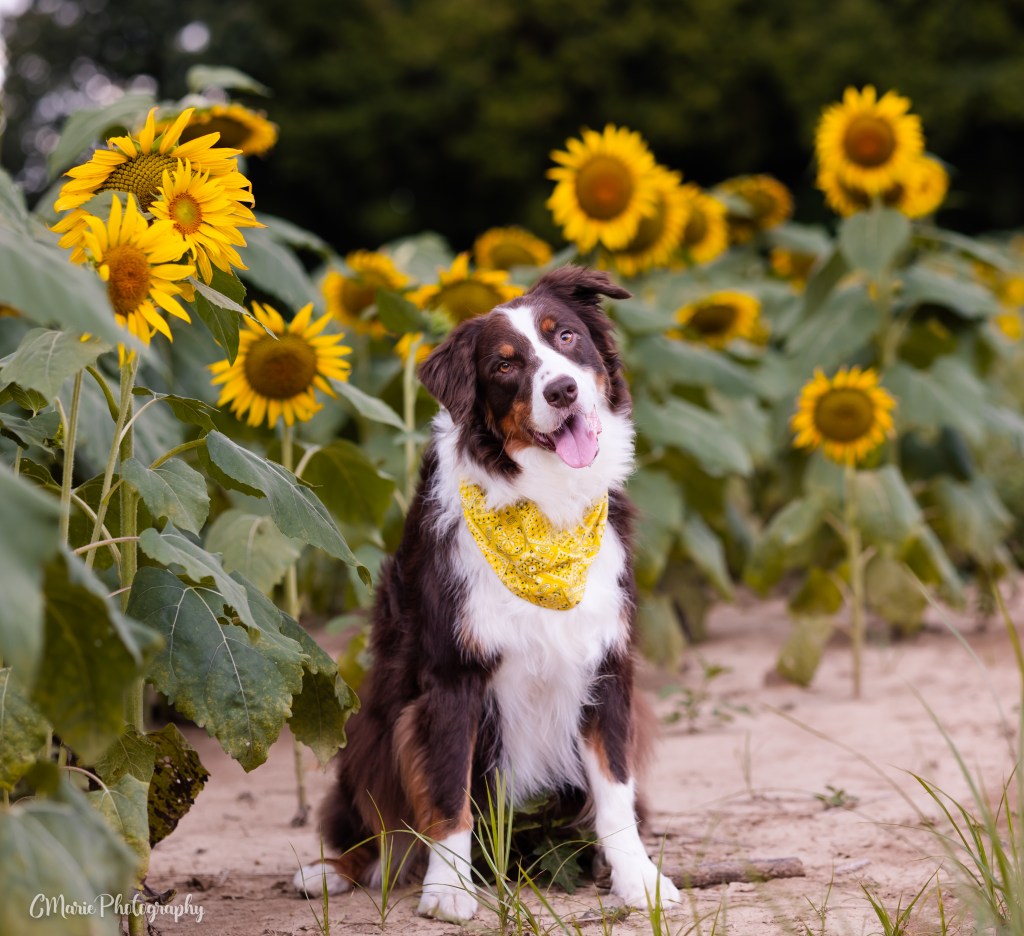
    We even went on our first real location photoshoot since Christmas—a sunflower field not far from home. It rained on us (of course), but we made memories, got soaked, and saw two rainbows on the way home. I’ve always loved photographing him, and being behind the camera again—seeing him on the other side of the lens—felt like a little piece of me was coming back to life.

    I’ve learned so much in this last year watching my boy become an epilepsy warrior. No, I don’t have all the answers. I know everything can change with just one seizure. But I want to encourage anyone who’s at the beginning of this journey: Hold onto hope.

    Watching your dog have seizures will never be easy—and it doesn’t necessarily get easier. But being prepared, educated, and deeply in tune with your dog makes a world of difference. It takes a long time to get medications and routines dialed in. Some dogs never fully stabilize, and I don’t want to offer false hope. I’m not God—He’s the only one who knows what the future holds. But I do believe we’re not meant to walk through this alone.

    Please don’t give up.
    Please keep advocating for your dog.
    Please don’t believe every piece of advice you hear online.
    Your dog’s life depends on it.

    And while I’m here—I highly recommend using ChatGPT. I use it on a regular basis to better understand epilepsy, seizure meds, supplements, bloodwork, and how to spot patterns in Forrest’s seizure log. (Yes, you can even upload a log and have it help you spot trends.) It’s not a substitute for medical advice—but it is an amazing tool for education and empowerment.

    Please don’t trust dangerous advice like “smelling vanilla ice cream stops seizures.”
    That’s not how seizures work. They can become life-threatening in an instant. The only thing that stops an active seizure is a rescue medication like intranasal Midazolam. Ice cream and essential oils won’t do it. Please don’t risk your dog’s life on myths.

    Now, how about something a little lighter?

    Yesterday, Forrest helped himself to the end of a stick of butter that fell out of the fridge. Yep. It was gone before I knew what hit the floor. Unsurprisingly, his tummy was a bit off overnight. Luckily, I had just made a new pupsicle recipe with the perfect ingredients to soothe his stomach.

    And now I get to share it with you!


    Healthy Tummy Pupsicles

    These are great for upset tummies or just as a healthy summer treat!

    Ingredients:

    • 1 can pure pumpkin (not pumpkin pie mix)
    • 1 ripe banana
    • ¼ cup plain Greek yogurt
    • Optional: 1–2 tablespoons natural peanut butter (no xylitol!)

    Instructions:

    1. Blend all ingredients in a blender or food processor until smooth.
    2. Pour into silicone bone molds or your favorite ice cube tray.
    3. Freeze until solid.

    This recipe made enough to fill one full tray of large bone molds (15 count, but he’s eaten a few) and 2 lick mats. Great for hot days, tummy upsets, or just because.


    To anyone out there with an epi dog: I see you. I know how hard it is. I know how much you love them and how scary this road can be. You’re not alone.

    And to Forrest—my brave, butter-snatching, sunflower-field-exploring, Easter-egg-hunting, epilepsy warrior—thank you for being the light in every season and the reason I keep going, no matter what we face.

    From our lavender world of grace — we’re holding onto hope and walking by faith. 💜
  • It’s hard to believe, but Forrest is officially 33 days seizure free — the longest stretch he’s had without a medication change or dose increase since our world changed on July 19, 2024.

    We’re creeping up on the one-year mark of his seizure journey, and while we’re not out of the woods, this season feels different. Lighter. Like I can breathe again, even if just a little. 🌿

    He’s had two acupuncture treatments and will go for his third one in a few days, right before the fireworks begin for the Fourth of July — a holiday that honestly makes me more nervous than festive. But we’re going in prepared and supported, and that’s the best we can do.


    💜 A Year of Learning, One Day at a Time

    Last summer, I avoided anything that felt remotely “exciting.” I didn’t even pull out his pool — I was too afraid. It had once seemed like playtime was a seizure trigger. And maybe it was. Or maybe his brain just wasn’t supported the way it is now with his meds and holistic care.

    But the other day, I filled up his pool again. It felt like a small thing — but to us, it was huge. He splashed. I smiled. And for a few minutes, we just let ourselves enjoy the moment without fear of the “what if.” Lately, I’m doing better at that. The way he bounces back so quickly is truly inspiring.

    Life with an epi dog means constantly balancing joy with caution. It means making peace with the unknown, because even on the best days, we don’t know when the next seizure will come. He’s had a few focal seizures recently — likely his brain’s way of fighting off something bigger. Still, I’m thankful. Every moment counts.


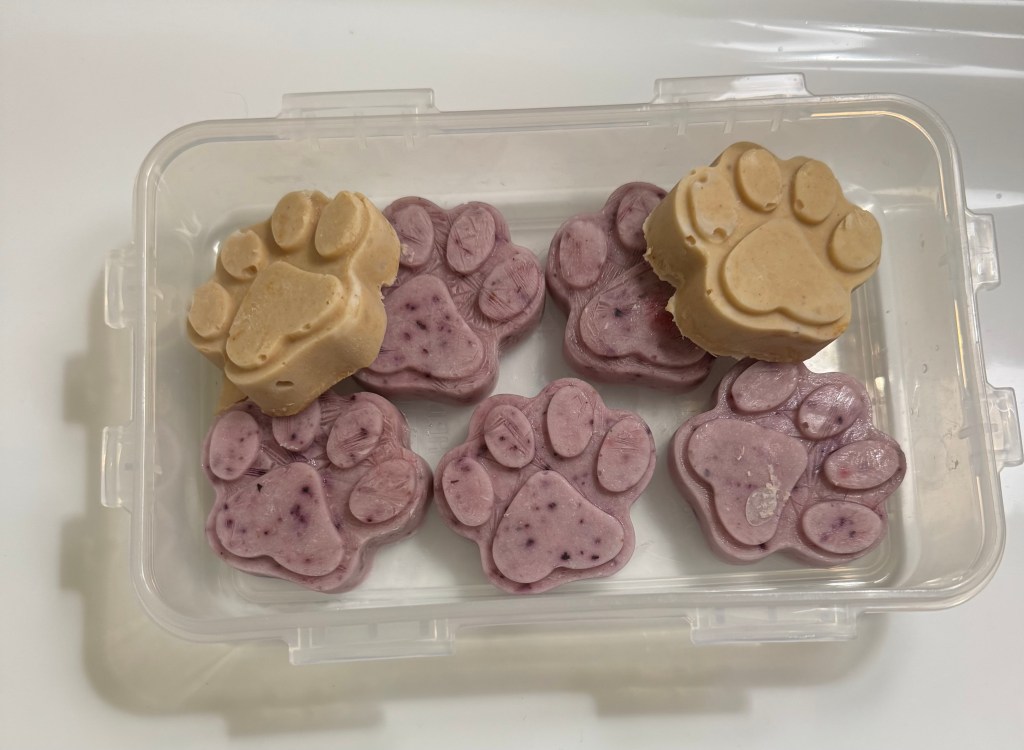
    🍓 Berry Good Pupcicles – Summer Treats for Your Pup

    With summer in full swing and the July 4th holiday upon us, I want to share a fun (and helpful!) recipe with you — Forrest-approved frozen treats that are easy, healthy, and safe for dogs on special diets. Make these now so you’ll have some yummy frozen treats ready to go when your dog needs something to calm him and take his mind off the all the fireworks.

    Berry Good Pupcicles

    Ingredients:

    • Blueberries
    • Strawberries
    • Plain Greek yogurt
    • Bananas (green or partially green — less sugar!)

    🌀 Instructions:

    1. Blend everything together until smooth.
    2. Pour into silicone molds — paw and bone shapes are extra cute, but anything works.
    3. Freeze and serve as a deliciously cooling, brain-boosting snack!

    Bonus tip: These are great for dogs who need low-sugar, antioxidant-rich treats — and they smell great too! This recipe is also pawfect for frozen lick mats, Kongs and West Paw Toppls too! Find our fav enrichment products (and more or our fav things!) in our Amazon store.

    (We may earn a small commission (at no cost to you!) on purchases made through our Amazon store.) https://www.amazon.com/shop/forrestakalittledude?ref_=cm_sw_r_cp_ud_aipsfshop_35N9V5HM13K8NX4849K7_1


    This season, we’re choosing to celebrate the little wins. A splash in the pool. A belly full of pupcicles. A stretch of calm days that feel like grace in motion.

    From our lavender world of grace — we’re holding onto hope and walking by faith. 💜

  • Hey friends, it’s been a busy week so I haven’t posted in a week because I’ve been juggling a lot, but I wanted to share an pupdate of what’s been going on in our lavender world this past week. 🐾

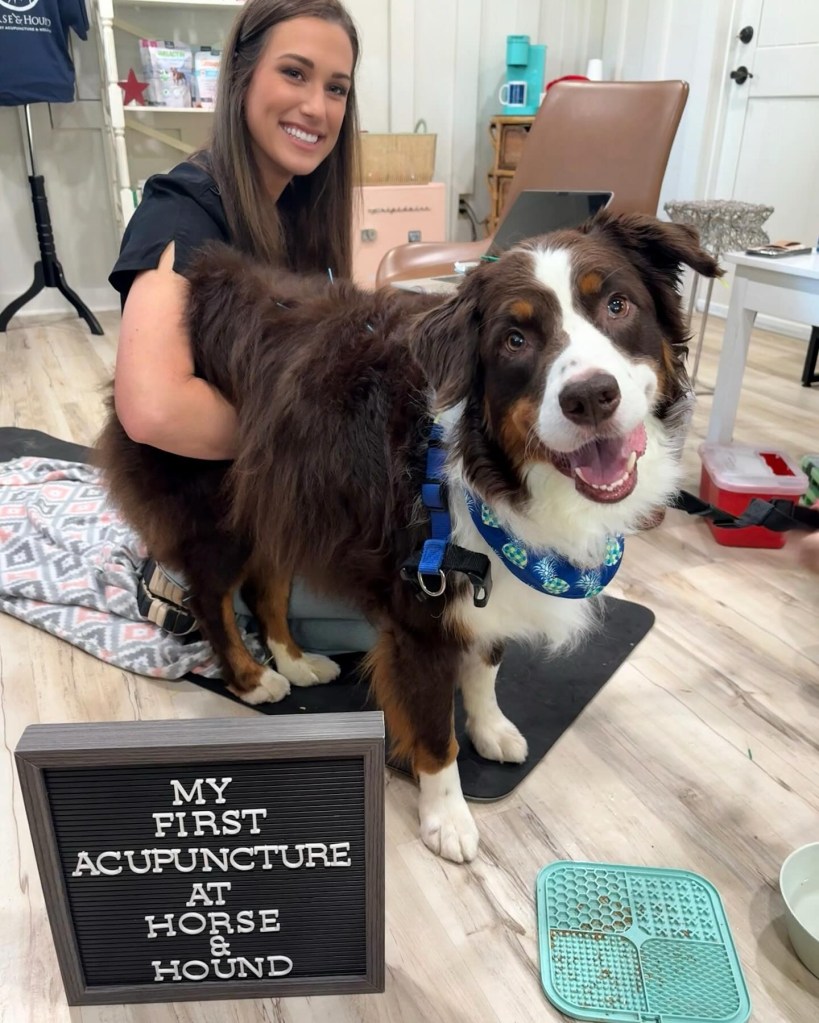
    Forrest had his very first trip to get acupuncture. He also tried electro-acupuncture, B12 injections, and laser therapy. I was honestly nervous about the whole experience — the trip itself is a long way from our house, so I had to take off work. I worried that the travel or any of the treatments might trigger a seizure, but thankfully, he did amazing, and no seizures came from it.

    We’re really hopeful about the difference these therapies could make in his seizure activity, and we’re looking forward to his next session.

    Speaking of seizures, Forrest had his 12th grand mal seizure since July 19th, 2024 — this morning at 3:08 AM. That’s only 22 days since his last one. I felt like it was coming on because he’s been shaking his head more the past couple of days and scratching his ears and rubbing his face last night. Even with his last phenobarbital dose increase on March 31st, he’s back in his usual seizure window of 17–23 days. Unless the seizures get closer together or worse, I’m hesitant to add more meds because of the long-term effects on his organs and quality of life. It’s such a hard balance — no clear answers with epilepsy, but I have to prioritize his quality of life. He’s only 8 years old, and I pray for many more years with him. Between seizures, he’s still his happy, energetic self, and that’s all I can ask for. During his seizure this morning, I sang Jesus Loves Me to him and quoted Psalm 23 over him, tears rolling down my face. I love him so deeply, and it tears my heart apart every time he has a seizure.

    It never gets easier, though. I still research and learn, even after 10 months on this journey. But it’s not the same heavy burden as before when I felt like everything could trigger a seizure and I had to walk on eggshells. Aside from fireworks and us being apart, I haven’t found any clear triggers — believe me, I study him closely. That helps ease some stress.

    Thankfully, I’m off work today so we have had a mostly chill recovery day because seizure days are busy days — stripping the bed, giving him a bath, and doing all the laundry. I try to get all that done in the morning so I can spend the rest of the day just being with him. Right now, I’m working on my computer while he rests beside me. After I write this, I am planning to disconnect and rest with him so I will be ready to work tomorrow.

    The next big challenge I’m facing is the fear around giving his heart worm prevention, Revolution. I’ve been praying so specifically about it — telling God my plan to give it five days after his next seizure, when his threshold has hopefully built back up, and wanting to do it on a Friday off or a Saturday morning so I can monitor him all weekend. But that meant hoping he’d need to have a seizure on a Monday morning — and well, here we are. He had one this morning, Monday morning. I’m working Friday, but I can give it Saturday morning. His neurologist said I can give an extra dose of Keppra that day for extra coverage. Please say a prayer for us — I haven’t given him preventatives since his seizures started last July. We live in a high heartworm area, so I can’t keep putting him at risk. If he got heartworms, it would be especially hard on him given his condition.

    That’s what’s been going on here lately — ups, downs, but always so much love. ❤️

    Since it’s Memorial Day weekend, I’m also reflecting on the value of life, the precious moments we have with those we love, and the strength it takes to keep going even when things feel hard.

    How do you stay strong during the tough days with your fur babies? I’d love to hear your stories or tips.

    From our lavender world of grace — we’re holding onto hope and walking by faith. 💜