The time change is coming up this Sunday, and it’s one of those small seasonal shifts that can make a big difference for seizure-prone pups.
If your dog takes anti-seizure medication, be mindful that when we “fall back,” sticking to the same clock time could actually create a 13-hour gap between doses. That sudden change can throw off your dog’s medication schedule — and their sensitive circadian rhythm — which can sometimes trigger breakthrough seizures.
See my last blog post for more detailed info on how to handle the upcoming time change.
Forrest’s clock rest last Friday (three days ago), after another 21 day stretch. This is typical of his usual pattern. I always administer his rescue medication Midazolam to help stop the seizure. This one was shorter for him, about 45 seconds. Rescue meds are so important. They’re literally life saving. If you’d like to understand them better or learn more about rescue meds, check out this blog post.
It’s been awhile since I shared a recipe so in light of his recent seizure, I thought I’d share the recipe for his post seizure frozen enrichment treat. I keep one or two in the freezer so I can give him one when he’s recovering from a seizure.
It helps him settle and stabilize his blood sugar afterward. It’s soothing, lasts a while, and gives him something positive to focus on.
He loves this toy and it lasts longer than any other one he’s tried so we highly recommend it.
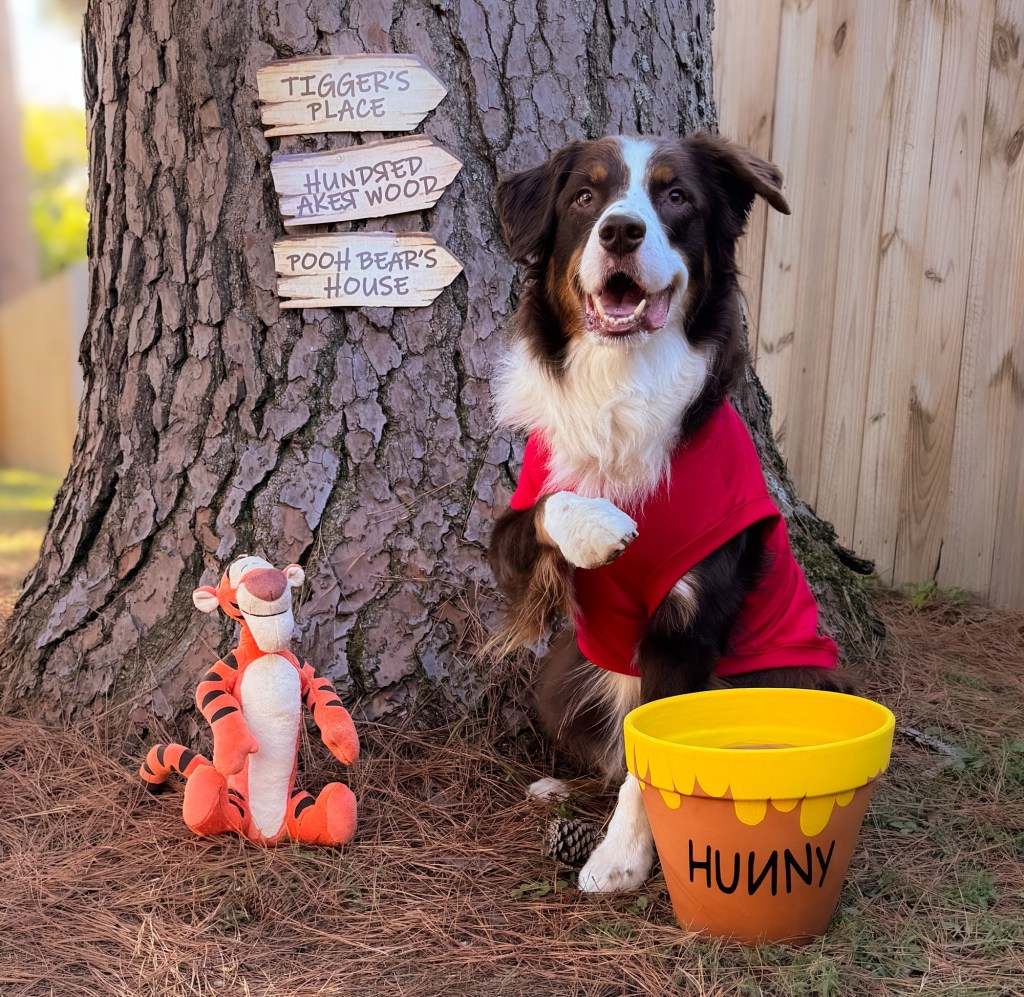
Oh, bother…
Forrest’s Post-Seizure Frozen Enrichment Treat 🍯
Ingredients:
Plain Greek yogurt
1 teaspoon honey
Natural peanut butter
A little bit of pure pumpkin
Adjust the portions based on how many you want to make and your dog’s dietary needs or restrictions. Mix everything together, spoon it into your dog’s favorite enrichment toy.
It’s a simple comfort that helps Forrest recover — and might help your pup too.
Speaking of honey, we hope you enjoy these pics of Forrest in his Halloween costume. Isn’t he the cutest Pooh!? 😍
If you want to follow Forrest’s journey, follow him on social media. I share on his FaceBook page daily. His life is so much more than his epilepsy and it’s so important for people to see that.
Please consider sharing this blog with anyone you know who loves a dog with epilepsy. Thank you! ❤️🩹
What about you? How are you making adjustments to keep your epi pup on track for the time change? ⏰
From our lavender world of grace, we’re holding onto hope, walking by faith. 💜
Daylight Saving Time ends soon, and for those of us caring for dogs with epilepsy, medication timing matters more than ever. Even a small shift in timing can affect your dog’s blood levels of anti-seizure medications (AEDs), which may increase the risk of breakthrough seizures. Planning ahead helps you avoid unnecessary setbacks.
When We Fall Back (End of Daylight Saving Time)🍂
When the clocks move back one hour, you have two choices:
1️⃣ Shift with the new time Example: If your dog gets medication at 8:00 AM/PM, you’ll now give it at 7:00 AM/PM (new time). ✅ This keeps the 12-hour interval consistent and often works best for most families. Earlier doses help maintain stable blood levels, making this the easiest and safest option.
2️⃣ Stay on the “old” time Example: Still giving meds at 8:00 AM/PM (old time) after the time changes. ⚠️ This creates a 13-hour gap between doses instead of 12, which can allow AED levels to dip. If you choose this route, make gradual adjustments (15 minutes earlier each day over several days) leading up to the time change. This helps minimize the risk of breakthrough seizures.
When We Spring Forward (Start of Daylight Saving Time)🌸
When the clocks move forward one hour, the situation is a little easier:
1️⃣ Shift with the clock Example: 7:00 becomes 8:00. There’s no gap — it just bumps the schedule forward an hour. Most people can switch right over without issue.
2️⃣ Stay on the “old” time Gradually adjust forward over several days if you want to maintain your original 12-hour interval.
🐾 How I Handle It With Forrest’s Meds
Forrest’s regular medication schedule during Daylight Saving Time is 8 AM / 8 PM.
When we fall back, we switch to 7 AM / 7 PM to maintain a true 12-hour schedule.
When we spring forward, we shift back to 8 AM / 8 PM again.
If you’re planning any schedule adjustments for your dog, it’s wise to check with your neurologist about using pulse doses of Keppra or Diazepam during the transition period to help prevent breakthrough seizures. Forrest’s neurologist has advised using Diazepam this way if we stick to our regular 8:00 schedule instead of falling back to 7 AM / PM like we always have before. I’ve been considering it, but the thought of adjusting his meds makes me nervous, so as of now I’m unsure what I will do.
Why This Matters: Circadian Rhythms and Seizures🌙
Our epi dogs have very fragile circadian rhythms, and many seizures are tied to these natural cycles. When the time changes, their rhythms shift, too.
Forrest’s seizure log shows this clearly:
During Daylight Saving Time, most of his seizures happen closer to the time we usually wake up.
When Daylight Saving Time ends, his seizures tend to occur earlier, between 1–3 AM.
Understanding your dog’s patterns can be incredibly insightful. Here’s a tip: Plug your dog’s seizure dates and times into ChatGPT and ask it to look for patterns. You can also include other details like when medications were started, doses changed, or stressors occurred. The more data you include, the more helpful the insights will be.
Be Prepared, Stay Consistent
Shifts in medication timing may seem small to us, but they can have big impacts on seizure control. Whether you shift all at once or make gradual changes, the key is planning ahead to keep your dog’s schedule (and brain chemistry!) as stable as possible.
How About You?
How do you handle the time change with your dog? Do you stay with the new time to keep your epi pup on track or do you make adjustments to stay with your specific time? I’d love to hear what works best for you — share your thoughts in the comments below.
A Little Reminder
I’m not a veterinarian. I’m a devoted dog mom sharing what I’ve learned through my journey with Forrest and guidance from his veterinary team. Always consult your vet or neurologist before making changes to your dog’s medication schedule.
If you found this post helpful, please share it on your social media to help spread awareness about canine epilepsy and support other pet parents caring for dogs with seizures. The more this blog grows, the more we can help other epi dogs and the humans that love them.
Follow Forrest on Facebook for daily life updates — not everything is about seizures, but I share our experiences to help others and show that dogs with epilepsy can still live full, joyful lives. Caring for a special needs dog is a privilege, and while I wish I could take his seizures away, I wouldn’t trade him for anything in the world. 💜
As a seizure dog parent, it’s natural to want to do everything possible to prevent your dog from having another seizure. When you see them go through something scary, the instinct is to think: “More medicine will fix this.” Over the past year since Forrest’s seizures started, I’ve read countless stories from other epilepsy dog owners and listened to webinars with veterinary neurologists, about how more medication doesn’t necessarily lead to better seizure control—and oftentimes, it comes at a high cost.
Medication Decisions Require Thought and Care
Seizure medications are powerful tools and they need to be considered very carefully. It’s important to accept that some level of seizure activity will likely always exist, and to weigh the benefits of seizure control against potential side effects.
One important thing I have learned is to avoid rush into major changes in the days immediately after a seizure—unless it’s an emergency. Give yourself time to research, track, speak to your dogs neurologist or veterinarian and reflect before adding more meds. The goal is to control the seizures, not eliminate them, though we would all love for that to happen.
Tracking your dog’s response to medications is essential. Keep a seizure log, note behaviors before and after episodes. Every dog is different. Work closely with your dogs neurologist or vet to determine the best plan for your dog.
Quality of Life Matters Most
The ultimate goal of seizure medications isn’t always to stop seizures completely. For some dogs and breeds, that may happen, but for many, the aim is to give them a happy, fulfilling life between episodes.
Ask yourself: if your dog is so heavily medicated that they’re too groggy to play, eat, or enjoy life, and if the medications are taxing their organs, is that truly the life they’d want? Is it the life you want for your dog? These are hard to answer questions that none of us wants to face but when you love an epi dog or any dog with special needs—we owe it to them and to ourselves to dig deep and answer the hard questions.
Insurance is Essential
One of the hardest realities of caring for a special needs dog is the financial aspect. Seizure management often comes with frequent vet visits, tests, and emergency care. This is why insurance is a must.
I use Healthy Paws for Forrest, and I’m so grateful I do. Without it, covering costs would be much more stressful. AKC also offers insurance even for dogs with pre-existing conditions, which can be a game-changer.
Advocate for Your Dog
No one knows your dog like you do. Track their behavior, notice patterns, and don’t be afraid to ask questions. Advocate for your dog’s quality of life just as much as their seizure control.
Caring for a special needs dog is a privilege. It comes with challenges, yes, but also with the kind of love and connection that makes every adjustment worth it. Forrest has had his seizures, yes, but he still runs and plays frisbee, plays in his pool, enjoys his favorite treats. We’re even going back to the beach this Fall! The first trip since his seizures started.
His seizures are tough, no doubt. His medications are serious and require him to have regular blood monitoring. All of which keep him safe. But they’re only one part of the picture. He is still his happy, silly, full of joy self and that makes my epi dog Mom heart very happy.
Track Your Dog’s Health Easily
One tool that has been incredibly helpful for me in managing Forrest’s seizures is the PetVitality app. It allows you to track medications, seizures, weight, elimination, vet visits, and more—all in one convenient place.
Whether your dog has seizures or just needs a little extra health tracking, this app makes staying organized and prepared so much easier.
Android: Use code: EPIDOGMOM for a 3 month FREE trial!
💜 A Note From Forrest’s Mom: I share our daily life on Forrest’s Facebook page—not just his seizures, but all the little moments that make life full and happy. My hope is to raise awareness about canine epilepsy and show that dogs can still live a joyful, “normal” life despite seizures. Caring for a special needs dog is a privilege I wouldn’t trade for anything.
💜 Help Spread the Word If you found this post helpful, please share it on your social media! The more people who read it, the more awareness we can raise about canine epilepsy—and the more support we can provide to those who love dogs living with seizures. Every share helps another pet parent feel prepared, informed, and less alone.
From our lavender world of grace, we’re holding onto love, walking by faith. 💜
Disclaimer:I am not a veterinarian. The information in this blog is based on my personal experiences with Forrest and research I’ve done. It is not a substitute for professional veterinary advice. Always consult your veterinarian or a veterinary neurologist regarding your dog’s health, medications, or treatment plan.
When my dog Forrest had his first seizure, I had no idea what to do. He fell out of bed in the wee morning hours while we were asleep, and I was terrified. Seizures are scary, but being prepared makes a huge difference. I want to share what I’ve learned — not just from experience but also from my vet team — so you’ll know how to help your dog if it ever happens. 💜
I’m not a veterinarian. This is based on my journey with Forrest and advice I’ve received from his care team. Please always consult your vet for medical guidance.
🐾 Step 1: Remain Calm
Try not to panic. Your dog needs you to be steady so you can think clearly and be present for him.
🐾 Step 2: Ensure Safety
Gently place a pillow, towel, or blanket under your dog’s head to protect his head.
Keep your hands away from his mouth.
Move him to a safe area away from stairs, furniture, or anything he could hit.
Remove children and pets from the room — your dog needs a quiet, calm environment during and after the seizure.
🐾 Step 3: Monitor the Seizure
Time the seizure.
If it lasts 3 minutes, get ready to head to the nearest emergency vet.
Grab an ice pack, wrap it in a towel, and place it on your dog’s back. Seizures raise body temperature very quickly, and overheating can be dangerous—even fatal.
If the seizure lasts 5 minutes, it’s an emergency — go to the nearest emergency immediately.
🐾 Step 4: Avoid Restraining
Do not hold your dog down — it can cause injury. Instead, stay close, speak softly, and let him know you’re there.
🐾 Step 5: Protect From Harm
If your dog is frothing at the mouth, you can gently wipe away foam — but don’t put your fingers near his mouth.
Never put anything in his mouth.
🐾 Step 6: After the Seizure (The Postictal Period)
Your dog will be disoriented and may feel scared or restless. Here’s how you can help:
Allow him to rest in a quiet area.
Keep him away from stairs.
He may need help going outside.
If he lost bladder or bowel control, gently clean him with lukewarm rags. Avoid baths, wipes with strong smells, or anything that might stress him further, which can trigger a second seizure.
Blow out candles, keep noise low, and make the day as calm as possible.
Offer a snack and fresh water once he’s stable.
🐾 Step 7: Seek Veterinary Attention
If it’s your dog’s first seizure: Call your veterinarian or head to an emergency animal hospital right away.
If your dog has seizures regularly: Follow your vet’s instructions for rescue meds and after care.
📱 Helpful tip: Record the seizure on video if you can — it helps your vet understand what happened. 📝 Keep a seizure log with date, time, and duration. (The PetVitality app is perfect for this! Keep reading for info on how you can get three months FREE!)
🐾 The Importance of Being Prepared
When Forrest was diagnosed with epilepsy, I quickly learned the importance of being prepared — not just emotionally, but financially too.
Pet Insurance
Every dog is healthy… until they aren’t. Emergency care, seizures, cancer, surgeries — bills add up quickly. Having pet insurance means you’ll never be forced to choose between your wallet and your dog’s care.
I use Healthy Paws for Forrest and put all bills on my Care Credit card (they offer interest-free promotions). Healthy Paws reimburses me, and I pay off the balance. It has been a lifesaver.
👉 If you’re shopping for pet insurance, look for a plan with no lifetime cap. A $10k cap may sound like a lot, but one major surgery or cancer diagnosis can use it up fast.
If your dog already has a pre-existing condition, don’t lose hope. AKC Pet Insurance offers coverage for pre-existing conditions after one year. That first year can still cover other medical needs, and after that, you’ll have support for the condition too.
(Check policy disclosures for all details. I am not affiliated with AKC or Healthy Paws.)
🐾 Helpful Tools for Pet Parents
One tool I love is the Pet Vitality app. It lets you track vaccines, preventatives, medical notes, and yes — seizures. The seizure log is fantastic! I love having all of Forrest’s health info in the palm of my hands for easy reference. It gives me such peace of mind. The developer has given me codes to share with my readers that gives user 3 months FREE! Here are instructions for how to redeem for Apple and Android users.
If you experience any issues using these codes, please send me a message and let me know!
🐾 Final Thoughts
Seizures are terrifying, but knowledge is power. Being prepared means you can help your dog safely and calmly.
If you’d like to learn more about what life with a seizure dog is like, I share daily updates about Forrest on hisFacebookpage. Not everything I post is about seizures—because Forrest is so much more than his epilepsy! I share about his adventures, silly moments, and day-to-day life, too. My hope is to help other pet parents by sharing our experiences and to raise awareness about canine epilepsy.
Forrest is proof that dogs can live a happy, full, and “normal” life with epilepsy. Yes, adjustments have to be made, but every one of them is worth it. Caring for a special needs dog is truly a privilege. I’d take his seizures away in a heartbeat if I could, but I wouldn’t trade him for anything in the world.
If this post helps you, please share it on your social media. So many pet parents face seizures without knowing what to do — your share could give them hope and guidance.
From our lavender world of grace, we’re holding onto love, walking by faith. 💜
Forrest had another seizure this past Tuesday. Only 21 days this time. Better than 14, but making it at least one full month would be even better. Every seizure free day feels like a small victory, and while it’s never easy seeing him go through a seizure, I’m thankful for the stretches of calm in between. ❤️🩹
Tomorrow we’re resuming acupuncture treatments. We plan to go every other week through November, then hopefully move to once-a-month maintenance. It’s about an hour drive one way, and Forrest has terrible car anxiety, which is why I haven’t taken him since June. I’ve been weighing the stress of the trip against the benefits of acupuncture, but I want to give it a fair shot for his sake.
To help cover the extra expenses, I’ve reopened my Etsy shop. You may not know this but I make really cute dog bandanas! Moving some inventory will provide extra income which helps support his treatments.
I’ve started using an app called Pet Vitality, which is a fantastic tool for tracking your dog’s health. You can log weight, seizures, medications, and even store vet documents, and more—all in one place! I just started using it, but it’s already helping me stay organized and more aware of Forrest’s health trends. Check it out! I know you’re gonna love it too! It’s also great for cat parents.📱
Helpful Tip for Other Seizure Dog Parents
This time, I was actually able topredict Forrest’s seizure, which has only happened a few times before. He was digging at one ear and pawing at his snout, like he was trying to get something out of his nose. I recorded a video and shared it on his story, and sure enough, he had a seizure at 5:59 a.m.
Watching for prodrome behaviors like these can help you anticipate a seizure before it happens. Every dog is different, but if you’re closely bonded with your pup and attentive to their habits, you might start noticing patterns. Forrest’s neurologist advises giving an extra dose of Keppra when these behaviors appear. I didn’t give it this time, because I doubted myself. I wish I hadn’t and from now on, I won’t. It may not have prevented the seizure entirely, but it might have reduced its severity.
In the past 12.5 months, Forrest has had 17 seizures, and I’m learning to trust my intuition more and more. Recognizing these warning signs can make a huge difference for you and your dog. ❤️🩹
I’m just so thankful that he’s still his same, happy, energetic self despite the seizures and all the meds. That’s such a blessing and one that I don’t take for granted.
Final Thoughts If there’s one thing I’ve learned, it’s that advocating for your dog, tracking behaviors, and doing your research is key. ChatGPT is such an incredible resource.
Please share this blog with other pet parents — so many dogs experience seizures, and spreading knowledge and support can make a world of difference.
Follow Forrest onFacebook to keep up with his journey, photos, and more helpful tips.
From our lavender world of grace — we’re holding onto hope and walking by faith. 💜








 The Epi Dog Mom Blog