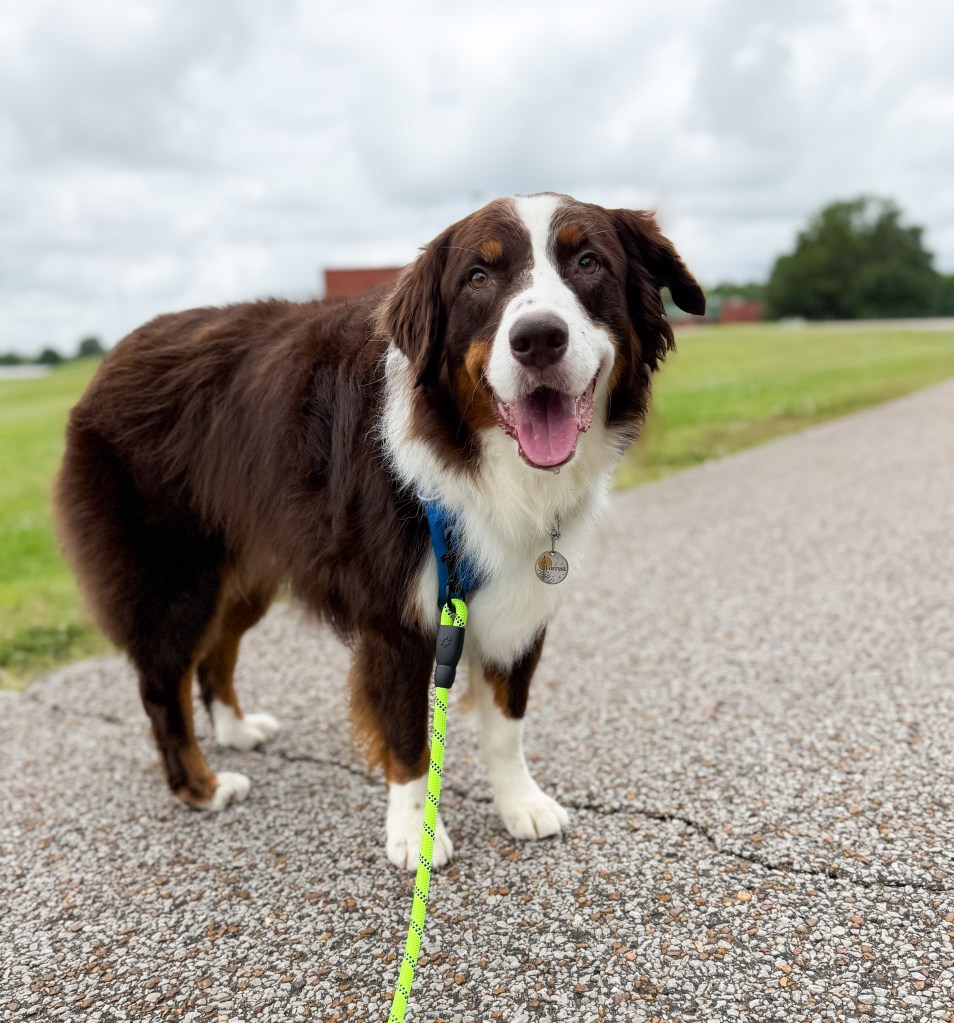

It’s been a while since I’ve written here, and I wanted to share a little update on what’s been going on with Forrest and why things have been so quiet lately.
Since November, Forrest’s seizure pattern has gradually been tightening and shifting. What used to feel somewhat predictable has started has become anything but. This is the most challenging season in our epilepsy journey we’ve faced.
Despite being on Denamarin Advanced to support his liver, Forrest’s most recent bloodwork showed a spike in his ALT levels, which prompted his neurologist to order a bile acids test. Unfortunately, the results came back with concerning information suggesting that Forrest has developed a form of liver disease.
Right now we don’t know exactly what type. He is scheduled for an abdominal ultrasound this Thursday, which should give us more answers.
His neurologist believes this could be medication-induced liver disease from phenobarbital, which can sometimes be reversible, provided he can safely taper down the dose. The plan moving forward is to transition him onto potassium bromide. If he tolerates it well and it controls his seizures, we will begin a very careful taper off phenobarbital to give his liver a chance to recover.
He is scheduled to begin a potassium bromide loading dose this Saturday, unless the ultrasound reveals something that changes our course.
As you can probably imagine, this has been a heavy and exhausting season. I simply haven’t had the time or emotional space to sit down and write the way I usually do. Right now my main focus is simply caring for Forrest and resting when I can alongside him. Managing epilepsy in dogs often comes in waves, and lately it feels like we’re all but drowning and are in desperate need of a life raft.
Even though things have been quiet here on the blog, please know that we’re still here.
If you’d like to follow Forrest’s day-to-day journey, I share much more frequent updates on his social media pages. Click this link to follow Forrest on Facebook. 🐶https://www.facebook.com/forrestakalittledude
And if you’ve walked this road before, I would truly love to hear from you.
If you have an epileptic dog and have gone through a difficult season like this, please feel free to share your story in the comments. If your dog has taken potassium bromide, I would especially appreciate hearing about your experience — how your dog tolerated it, and anything you learned along the way.
Sometimes the most comforting thing during hard seasons is simply knowing we’re not walking them alone.
Thank you for being here and for continuing to follow Forrest’s journey.
From our lavender world of grace, we’re holding onto hope, walking by faith. 💜
One thing I’ve become extra mindful of on this journey with Forrest is what we put into our bodies — and that includes something we use every single day: water.
For years, we drank tap water filtered through a Brita pitcher with the Elite filters. I assumed we were doing the best we could. The water tasted fine, and I believed that meant it was “clean.”
What I learned recently surprised me — and honestly changed everything.
Wake Up Call
When I entered our zip code into a water quality database, I learned that certain contaminants linked to cancer risk were present at levels up to 35 times higher than health-based recommendations! ☠️ Considering that our pets drink the same water every day — often in greater proportion than we do — that information was impossible for me to ignore.
What I Learned About Filtered Water
Brita (and most pitcher filters) do help improve taste and reduce certain contaminants, but they are primarily designed to reduce things like chlorine, odor, and some metals. They do not remove many of the dissolved solids and contaminants that can still be present in municipal water, depending on where you live.
In other words: 👉 They make water taste better 👉 They don’t necessarily make it as pure as we might think
Most refrigerator water filters are actually very similar in filtration capability to pitcher filters — convenient, yes, but still limited.
That realization was a turning point for me.
Why I Chose a Reverse Osmosis (RO) System
After researching options, we chose an APEC reverse osmosis system — and I truly can’t say enough good things about it.
Reverse osmosis systems filter water at a much deeper level, removing:
Total dissolved solids (TDS)
Heavy metals
Industrial contaminants
Many things pitcher and fridge filters simply don’t catch
Clean drinking water matters for us, and it matters just as much for our pets, who rely entirely on us for their health.
The Hidden Cost of Pitcher Filters
Another thing that finally pushed me over the edge?
The constant refilling.
Between:
Me
Forrest
Cooking
Making ice
I was refilling that pitcher constantly. It got old fast.
And when I added up the cost of replacing the more expensive Elite filters, I realized I was spending quite a bit over time — with limited filtration to show for it. 😣
Installation Was Easier (and Cheaper) Than I Expected
I don’t have family or friends nearby who could install mine, so I hired someone and was able to get it installed for $125, which I felt was very reasonable.
That said, the manufacturer and many reviews state that someone with basic handyman skills can install this system themselves. No professional plumbing license required.
I also opted for the refrigerator hookup, which means:
Our ice is now made with RO water
No more refilling ice trays
The RO system currently supplies our ice maker, and that same line will support a future water-dispensing fridge. 💧
Testing Our Water (Another Shocker)
I tested four different water sources: our tap water, water from our Brita pitcher (using the Elite filter), bottled water, and our water after installing the reverse osmosis system.
What surprised me most was how close the tap water and the Brita-filtered water tested to each other, despite using the more expensive pitcher filter.
In contrast, the bottled water and the RO-filtered water tested very similarly to each other — and significantly lower than both the tap and pitcher water.
That was the moment it really clicked for me: improving taste isn’t the same thing as deeply filtering what’s in your water.
How You Can Learn More About Your Own Water
Want to learn more about what’s in your drinking water? You don’t have to guess!
If you’re not ready for an RO system, you can also:
Order a water quality meter
Use a mail-in water test kit
Test your current setup and decide from there
The EWG website doesn’t just show what’s in your water — it also helps guide you toward filtration options that fit your needs.
Final Thoughts
I wish I had done it sooner.
✔ Affordable ✔ Cleaner water ✔ Less daily hassle ✔ Better for Forrest ✔ Better for me
APEC’s customer service was top-notch, the system has been flawless, and the peace of mind is priceless.
Clean drinking water is something we often take for granted — until we learn what’s really in it. And now? I feel better knowing we’re drinking cleaner, safer water — every single day.💧
Disclaimer
This post reflects my personal experience and research as a pet parent and consumer. I am not a medical professional, veterinarian, or water quality expert. Water quality varies by location, infrastructure, and testing methods, and what works for one household may not be necessary or appropriate for another. Information shared here is for educational and informational purposes only and is not intended to diagnose, treat, cure, or prevent any disease in pets or humans.
Some links in this post may be affiliate links, meaning I may earn a small commission at no additional cost to you. I only share products I personally use and genuinely feel comfortable recommending. I encourage readers to review their local water quality reports and consult appropriate professionals when making decisions related to health, pets, or home systems.
Have you ever checked what’s in your local drinking water — or thought about how it might impact your pets? I’d love to hear your thoughts or experiences in the comments.
If this post was helpful, feel free to share it with another pet parent.
From our lavender world of grace, we’re holding onto love, walking by faith. 🪻
If you love a cozy, good-smelling home, you’ve probably wondered the same thing I did:
Can home fragrance trigger seizures in dogs? 🤷🏼♀️
When my Australian Shepherd, Forrest, started having seizures, I questioned everything in our environment — food, cleaners, lighting, stress, and yes… scents. ❓
I eliminated home fragrance completely when his seizures first began. We went a long time with no wax, no candles — nothing. So this is a road I’ve walked already.
Over time, through research, observation, and guidance from veterinary professionals, I found a balanced approach that keeps Forrest safe without giving up a home that feels comforting to me.
If you’re an epi-dog parent, you understand why we try everything to help our precious epi dogs. 💜
Strong airborne chemicals — from essential oils, aerosols, smoke, or heavy fragrance — can irritate the respiratory system and add stress to the body. In a dog with epilepsy, stress or irritation can lower seizure threshold.
Epilepsy is already present in the brain. Environment can influence how stable that system stays.🧠
Important reality check for epi-dog parents
If you’ve been on this journey for any length of time, you know this truth:
We can drive ourselves crazy trying to find “the trigger” that will magically stop seizures.
Most idiopathic epilepsy does not have a single environmental trigger. It doesn’t mean environmental care isn’t worth doing — it absolutely is. But it also means we eventually have to accept:
We manage. We support. We love them. And sometimes seizures still happen.
If you’re in that place — you are not alone. I am with you. 💜
Certain scent families deserve extra caution
Veterinary toxicology references caution against these essential oil families for seizure-prone pets due to neurologically active compounds:
• Eucalyptus • Rosemary • Peppermint • Tea tree • Pine / fir • Citrus oils • Clove • Oregano / thyme • Lavender
These often appear in “spa,” “clean linen,” “forest,” “energizing,” or “herbal” scent profiles.
I simply skip them. 🚫
A note about essential oils and diffusers
A gentle word about essential oils in epilepsy communities
If you’re part of seizure-dog groups, you’ve probably seen the advice to place frankincense or other essential oils under a dog’s nose during a seizure to help them “come out of it.” I completely understand why desperate pet parents reach for anything that sounds hopeful — I’ve been there too. Essential oils are highly concentrated plant compounds, and many contain neurologically active components that can irritate the respiratory system or affect nervous system signaling, especially in seizure-prone dogs. While some holistic practitioners incorporate oils in carefully controlled ways, there is currently no veterinary neurologic evidence that essential oils stop active seizures, and improper use can do more harm than good. If you’re interested in using essential oils, I strongly encourage working with a qualified holistic or integrative veterinarian who can guide safe oil selection, dilution, and proper use.It’s also important to note that essential oils should never replace true seizure rescue medication. Proven rescue options such as intranasal Midazolam or rectal Diazepam are life saving medications specifically designed to safely interrupt an active seizure. Essential oils, even when used under professional holistic guidance, should only ever be considered complementary support — not a substitute for medical seizure protocols. If you’d like to learn more about the difference between rescue medications and long-term seizure management tools, I’ve written a separate post explaining rescue meds versus cluster-busters, which I’ll link here.
Why I avoid plug-ins, incense, aerosols, and carpet fresheners
• No fragrance in closed rooms • No overnight warmers • Good airflow • Forrest can freely leave the room
Other overlooked airborne risks
Since we’re talking about inhaled irritants, these matter too:
• Aerosol hair spray • Heavy perfume or cologne • Cigarette smoke or vaping
These create far higher airborne exposure than gently warmed wax and are unquestionably harmful to pets’ respiratory systems as well as other health issues.
My current experiment
Fragrance has never appeared to impact Forrest’s seizure pattern. But epilepsy can shift over time, as his recently has, so I’m currently repeating a new fragrance-free trial to see if it makes any difference.
I’ll share results once I have them.
You don’t have to give up a cozy home
If you love a good-smelling home:
• Choose gentler scent families • Avoid aerosols and plug-ins • Don’t trap pets in fragranced rooms • Use airflow like open windows or an air purifier • Observe your dog
Small changes. Big peace of mind. ☺️
And if all else fails…
There’s always one foolproof way to fill your home with fragrance that everyone can agree on:
Bake cookies. 🍪
If you’d like to follow Forrest’s epilepsy journey, daily life, and the things we learn along the way, you can find his social links below. We’d love to have you along for the ride. 🐶
From our lavender world of grace, we’re holding onto love, walking by faith. 💜
Please consider sharing this blog to help it reach the pet parents who need this information most. 🐾
It’s been a little quiet here over the holidays—not for lack of life, just a very full season.
Christmas was sweet and busy, full of cozy moments, cute sweaters, and time together. I’m sharing some of those moments in the slideshow below because they’re worth remembering. ❤️
New Year’s Eve came with fireworks, planning, and doing all I could to help Forrest feel safe. Despite our best efforts, he had a seizure on January 3rd at 5:53am. That’s the thing about epilepsy—sometimes you do everything right, and it still shows up.
This first post for the new year isn’t about big announcements or heavy updates. It’s about taking things as they come, celebrating the quiet wins, and staying present in the in-between moments. And sharing some of those precious moments with you. 🐶
If you want to keep up with Forrest’s day-to-day life, I share most often on his Facebook page, with photos, videos and little updates in real time. You can also find him on TikTok and Instagram—all linked here on the blog.
Thank you for being here, for caring about him, and for walking this journey with us.
From our lavender world of grace, we’re holding onto hope, walking by faith. 💜
What did the holidays look like in your world this year? Share with us in the comments. We’d love to hear.
New Year’s Eve is right around the corner, and if you have a dog that’s sensitive to fireworks — especially a neurologically sensitive or epileptic dog — now is the time to start planning. Don’t wait until the the day of.
For dogs like Forrest, fireworks aren’t just “scary” — they are a neurologic trigger.
Fireworks around us often start early (sometimes before it’s even fully dark) and go on for days, not just one night. Because of that, we plan ahead every year.
Here’s what I do for Forrest 👇
⏰ We feed early. It gets dark around 5ish here, and once fireworks start, Forrest will not eat, drink, or go potty. So we feed him early, take our NYE photos early, and get settled in for a calm night before the noise starts.
NYE kisses (early!) 😘
✓ We have a medical plan in place. Forrest’s neurologist and I have worked out a fireworks protocol specific to him. Last year, Forrest had a seizure 24 hours after NYE fireworks. We know firsthand, delayed triggers are very real for him and many seizure dogs.
⚠️ Important note: Before Forrest had seizures, he used trazodone — and it worked great. However, trazodone can lower the seizure threshold, so it’s no longer safe for him. That said, it can be a great, affordable option for non-epileptic dogs. Many vets can call it into a pharmacy, and you can often use GoodRx to keep costs low.
If you have an epileptic dog, please talk to your dog’s neurologist (or vet) about what is safe. If you don’t have a neurologist yet and your dog has seizures, I highly recommend getting one.
✨ Enrichment is prepped — even if he doesn’t use it. I always have frozen enrichment treats ready (lick mats, long-lasting treat toys), even though Forrest usually has zero interest once fireworks start. Many dogs do benefit from these, so they’re worth trying and having on hand.
No blaring TV (we don’t normally watch TV loud, and honestly, he would still hear the fireworks anyway)
The goal is to keep things as normal and calm as possible — the fireworks already provide more than enough stimulation. 🧨
Fireworks are not fun for many dogs, other animals and many people. 😢
🚫 Please do not leave dogs outside during fireworks. Even dogs who “seem fine” can panic. Dogs give subtle stress signals that are easy to miss. Always provide a safe indoor space.
🧠 For seizure dogs specifically: You should already have:
Rescue meds on hand
A cluster-buster plan
If you haven’t yet, now is the time to have a conversation with your dogs neurologist about fireworks. Some dogs may benefit from a temporary protocol to help them through this time, which can sometimes make seizures milder — or prevent one altogether. Forrest will be given Xanax and extra Keppra, per his neurologist, to help him through the fireworks.
💛 Most important takeaway: Know your dog. Plan ahead. Don’t wait until the night of. NYE is only 9 days away.
‼️Important note about CBD & epileptic dogs
CBD is often recommended online for fireworks anxiety — but epileptic dogs are different.
CBD can interact with anti-epileptic drugs (AEDs) like phenobarbital, Keppra, and others. These interactions can:
Change how seizure medications are metabolized
Reduce their effectiveness
Actually increase seizure activity in some dogs
Because of this, CBD should never be tried for the first time during fireworks or other high-stress events unless it is already part of a neurologist-approved treatment plan for your epileptic dog.
I learned this the hard way. I gave Forrest CBD from a reputable, highly rated, expensive brand — and instead of helping, it triggered seizures for him.
CBD can be helpful for some dogs, but epilepsy adds a layer of complexity that requires medical guidance. What works beautifully for one dog can be dangerous for another.
If you have an epileptic dog and are curious about CBD, this is a conversation to have with your neurologist well in advance, not something to experiment with on New Year’s Eve.
Disclaimer: I am not a veterinarian or neurologist (as stated in my disclaimer). I am a dog mom — and an epileptic dog mom as of July 2024 — who believes deeply in education, research, and advocacy.
I share fact-based information from research and from my dog’s veterinary and neurology team — not guesswork, trends, or “miracle” claims. I don’t know everything, but I do have real-life experience, and I care deeply about helping other dog parents feel less alone navigating this disease. ❤️🩹
I created this blog so other epilepsy dog parents would have a place to turn for organized, practical support, because there is so much to learn — and no one should have to figure it out alone.
If this blog helps you in any way, or if you have a friend who may find it helpful, please consider subscribing and sharing. 🫶🏼
Affiliate Disclosure: Some of the items I share are linked through our Amazon store. If you choose to purchase through those links, we may earn a small commission at no additional cost to you. These are products I personally use with Forrest and would recommend regardless of commission. 🐶
From our lavender world of grace, we’re holding onto hope, walking by faith. 💜